Embracing Life
/
©NICOLE BRATT
Hello again, dear ones,
Apparently, October is the month I’m going to keep talking to you about death.
I was raised in a Catholic household, and I was exposed to death at a pretty young age. Most notably, when I was a child, a drunk driver caused a horrific crash that killed my aunt, uncle, and unborn cousin, and left my other two cousins critically injured.
I wasn’t allowed to go to the funeral. There was a dark sense of hush-hush – my memory says we discussed it only in whispers. Crying was done in private. Grief was private. Death had come terribly and tragically close. We needed to push it away again.
I also remember when our childhood dog – an Irish Setter named Mindy – died. My dad buried her in the backyard under the lilac bushes, and my sisters and I were allowed to stay home from school the next day. There was an understanding that grief was valid and that it needed space. But somehow death itself remained something we didn’t talk openly about with others.
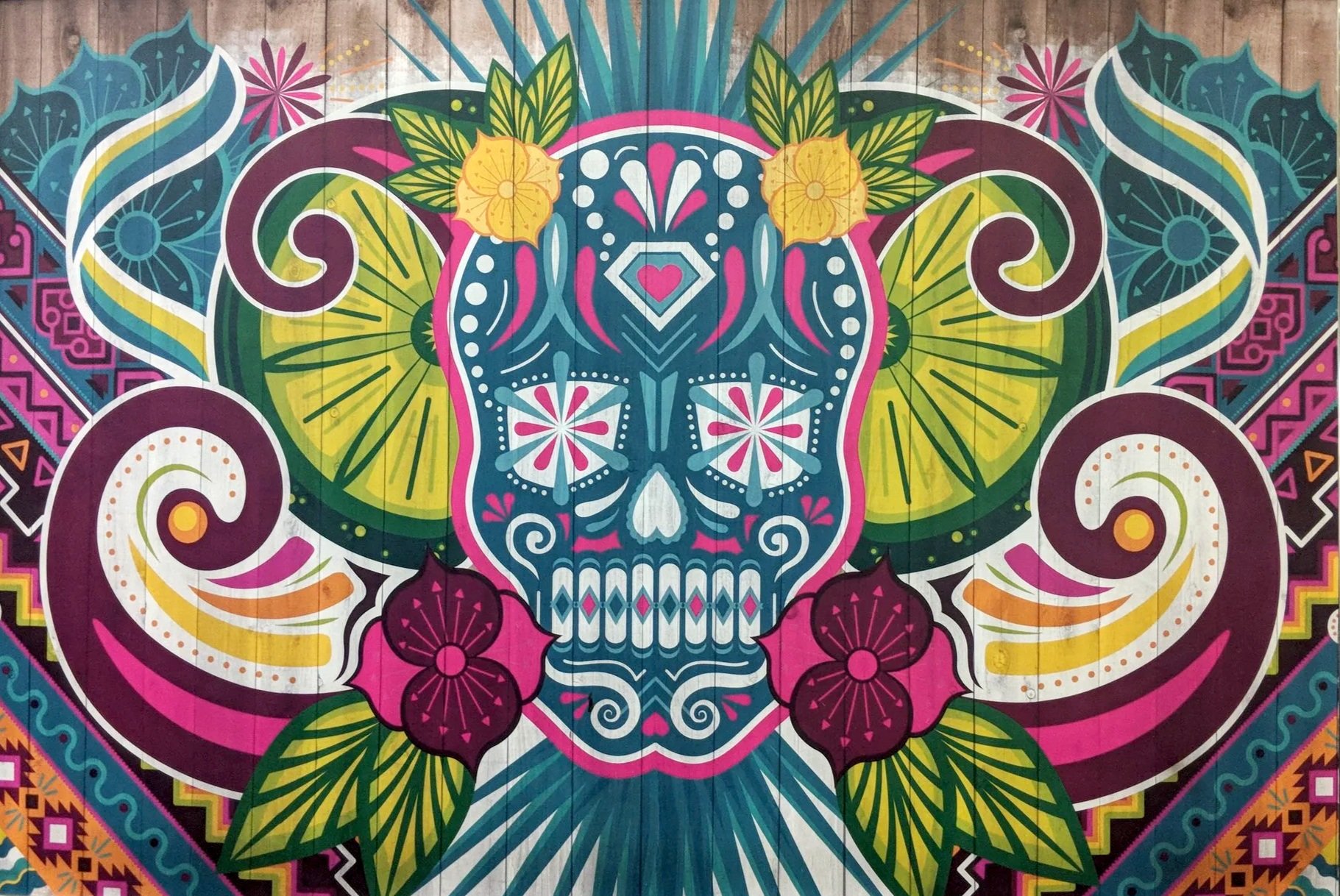
So imagine me in my early 30s, living in San Francisco, encountering Día de Muertos for the first time – with awe, curiosity, delight, and grief. Here was a profoundly different way of relating to death.
San Francisco has a thriving Mexican and Mexican-American community, and every year Día de Muertos (Day of the Dead) is celebrated through art exhibits, altars, gatherings, remembrance, and a huge procession through the streets of the Mission neighborhood.
I had never experienced anything like it. And it changed my life.
Here was death – the thing I had learned was somber and dark and horrible and mostly not to be talked about – literally being brought out into the streets. Into community. Grief shared. Lives celebrated. Humanity’s full cycle honored.
The celebrations I encountered were creative. Colorful. Communal. Political and personal. Humbling and inspiring. Altars and photographs, flowers and art, music and food honoring people famous and unknown, family members and ancestors, the young and the elders – people whose lives had ended but who were still being remembered well.
Here was a way to embrace the fullness of life, which includes death.
Día de Muertos has roots reaching back thousands of years to Indigenous Mesoamerican traditions in what is now Mexico, including those of the Aztec and other Nahua peoples. Spanish colonization brought Catholicism – often brutally and by force – and over centuries, Indigenous traditions adapted alongside imposed Catholic observances, shaping the Día de Muertos traditions celebrated today.
This was not a holiday tradition I was raised with. But I have embraced it as an adult – with respect and gratitude – because it makes so much more sense to me.
Death hasn’t become less sad. It has taken my breath away and broken my heart; it has left it’s bitter taste in my throat. It has also, however, become less unspeakable. Less secret. Less lonely. Less isolated. Less far away.
Having my eyes opened to Día de Muertos all those years ago was the beginning of a profound shift in my relationship with death. I began to see that endings are happening all the time, and that death and life are not – and cannot be – separate.
I talk more openly with people about death and grief now. Each year, I create my own altar for my departed loved ones. When I moved to Seattle, I sought out the Día de Muertos celebrations here (such as this one). I shared the tradition with anyone who would listen. Two years ago, I traveled to Oaxaca specifically for Día de Muertos because I wanted to experience it more deeply.
I’ve deepened my studies of death and dying, as well as grief and loss, including a yearlong course with Anne Pitman based on Stephen Levine’s book A Year to Live.
And somewhere along this path that is my own life, I realized that I want to help other people make contact with this part of life, too.
Not because I have figured out death. I haven’t.
But because my willingness to look at death has changed my relationship with being alive.
It has made me more interested in and compassionate about endings of all kinds. People. Pets. Plants. Relationships. Seasons. Eras. Exhales. Versions of ourselves we once were.
Endings happen as often as beginnings.
It has made me wonder what keeping death at a distance costs us. What does that steal from our Life? This one precious life.
(Hat tip to the late, great Mary Oliver.)
And we’re living it at a complicated moment – amid climate change, political bullshit, the attention economy, senseless wars, and what sometimes feels to me like a crisis of kindness toward one another.
So I find myself increasingly interested in some pretty big questions.
What deserves my attention?
What deserves my energy?
How do I want to inhabit this body while I have it?
How do I want to show up for the people I love?
What do I want to contribute to this world before I leave it?
What does a life well lived mean to me?
And when was the last time I actually thought about any of that – and then took action on it?
Maybe that’s part of the strange gift that Death has given me.
The more willing I have become to look directly at the fact that my life will end, the more interested I have become in how I am living it.
All of this – and more – is why I hope you’ll join me this Sunday for a shared journey of honoring death and embracing life.
With love and gratitude,
Nicole
©NICOLE BRATT
“Death is not the opposite of life, but a part of it”
— Haruki Murakami