
Reclaiming Our Attention
/
From Exquisite Creatures Exhibit, ©NICOLE BRATT
Hello again, friends,
Last week, I wrote about the attention economy, our increasingly distracted minds, and the simple fact that our brains get better at what we practice most.
Ok. So, what can we do about it?
Because while our phones, screens, and the forever stream of content competing for our attention aren’t going anywhere, we do have some agency in how we engage with them.
And we can practice something different.
Here are some simple ways we might begin reclaiming our attention – with a little more stillness, presence, and spaciousness along the way.
Read something... on paper.
Pick a magazine or newspaper you love and support it by subscribing to the print version. Read a paper book. Support your local library! They still exist, and they still lend books, magazines, and DVDs. (Remember DVDs?) Going to a physical place and intentionally choosing what to read asks us to slow down, pay attention, and exercise a little discernment.
Reading long-form content asks us to sustain our attention in a way that scrolling does not.
Get outside. Rain, snow, or shine.
Don your outdoor clothes and use all your senses to be in nature – even if it’s urban nature. Ideally, leave your phone at home.
Breathe in the fresh air. Allow your eyes the easy exercise of focusing on different things, near and far and in between. Notice temperature, smell, and sound. Observe the birds. Experience this season as it incrementally moves toward the next.
Do just the one thing.
Stop eating and doing Wordle. Stop scrolling Insta while you are on the phone with your mom. Stop checking your email while you walk your dog. Multi-tasking is a myth: it splits your attention even further and means you aren’t present or efficient with either. Fully participate in the one thing you are doing. Notice how much more rewarding it is.
Make your screen(s) less convenient.
Take social media, news, and/or game apps off your phone. Give yourself a timer for online distractions, and consider doing your scrolling somewhere you have to intentionally go – like your home office, rather than your couch.
Need help? Try a screen time or focus app like Opal, one sec, Forest, Freedom, or ScreenZen.
Plan a screen-free day once a week. If that seems daunting to your screen-addicted self, start with half a day.
And please, stop taking your phone to bed! Charge it somewhere else in the house. Turn off sounds, vibrations, and notifications by scheduling Do Not Disturb from bedtime until morning. Set it once, and you don’t have to think about it again.
Make something.
Start or take back up a craft, an art project, or an instrument. Make a meal. Plan a book club. Rearrange the living room. Creative tasks ask for sustained attention, and they help us develop it.
And unlike the endless consumption of online content, there’s something deeply satisfying about creating something with our own minds and our own hands.
Be fully with the people you’re with.
Put your phone down when you’re with someone else. Be present. Look them in the eye. Listen to what they’re sharing – both verbally and nonverbally. Enjoy the fullness of your shared experience and this amazing human you get to be in relationship with.
Simply pause.
Catch yourself being pulled in too many directions? Spinning too many plates? Losing your clarity? Pause. Take a few deeper breaths and create a little space in the moment. Reset. Regain your focus and intention.
Shake it off!
Screen time often draws our bodies – including our eyeballs – into a motionless state (except perhaps for that scrolling thumb).
So sit or stand up. Give yourself some simple free-form bounces, shakes, wiggles, and/or stretches. Maybe have a one-minute dance party in your room or chair. Shake, shake, shake.
Then reassess. Return to what you were doing, or switch course. You have autonomy.
Practice being still.
Sit your butt down and get still. Call it meditation (or not). Close your eyes (or not). Just quit spinning your wheels for a few minutes.
Start small if this feels foreign or difficult – three to five minutes. Remember, you're training your brain.
You wouldn’t walk into a gym and start deadlifting 200 pounds without learning proper alignment and movement, starting off with lighter weight, and gradually building strength over time. Why would we expect our minds to be any different?
Take śavāsana.
You don’t have to wait until you’ve completed a full yoga practice. You don’t have to earn it. Just set yourself up with some comfy props, an eye cover, and a timer, and lie down. Make it cozy and decadent.
Sure, your mind might be busy. But that’s the practice. Observe what happens when you give yourself permission to rest.
~
None of these ideas requires a dramatic overhaul of your life. These are small choices. And just like our habits of distraction, they add up.
We absolutely can train our brains for greater focus, calm, resilience, and joy.
Our attention is precious.
Our attention is time in action.
How we choose to direct it shapes how we embrace and experience our lives.
In gratitude,
Nicole
PS. What are your go-tos for you to regain focus? I'd love to hear them!
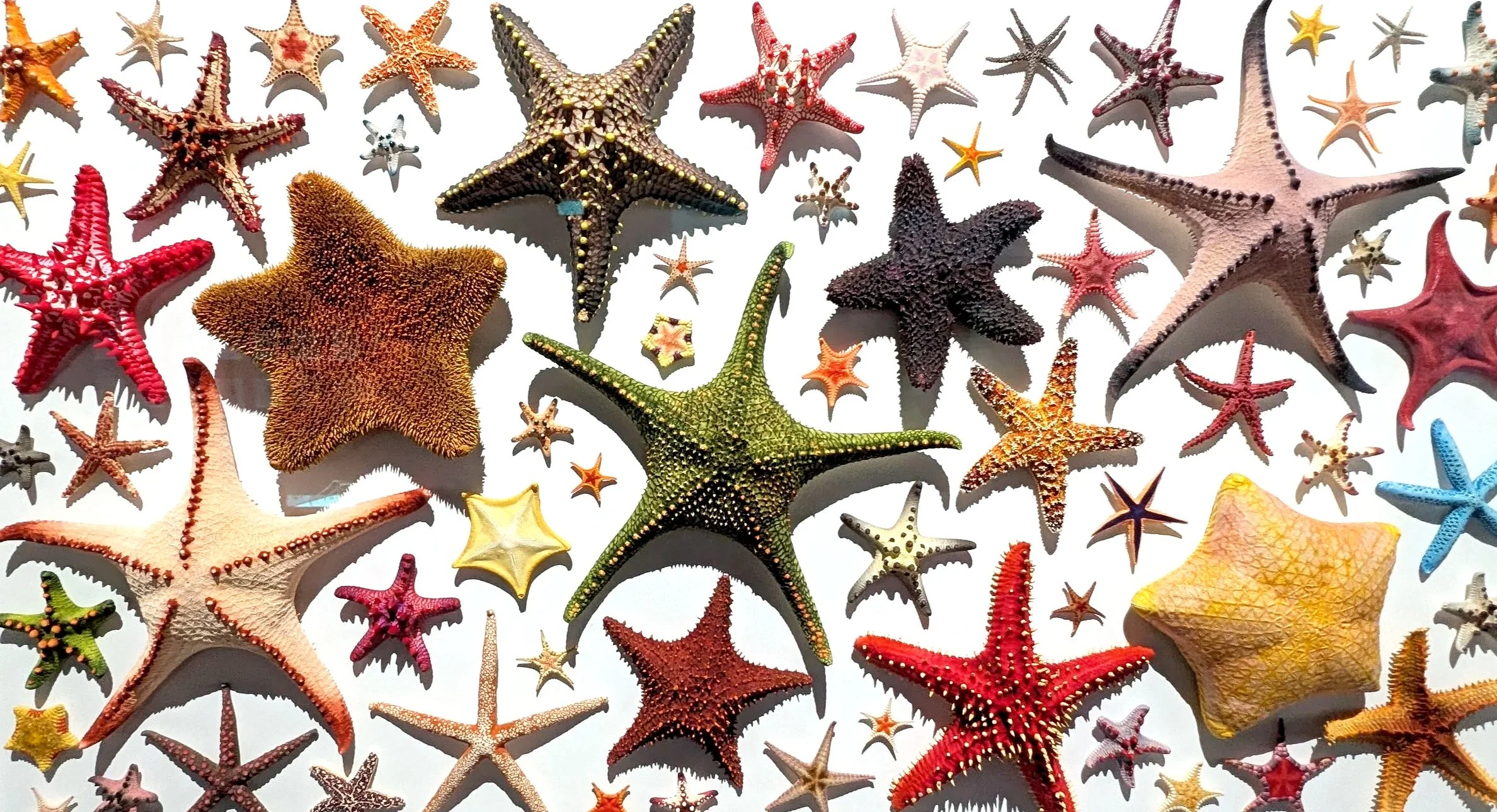
From Exquisite Creatures Exhibit, ©NICOLE BRATT